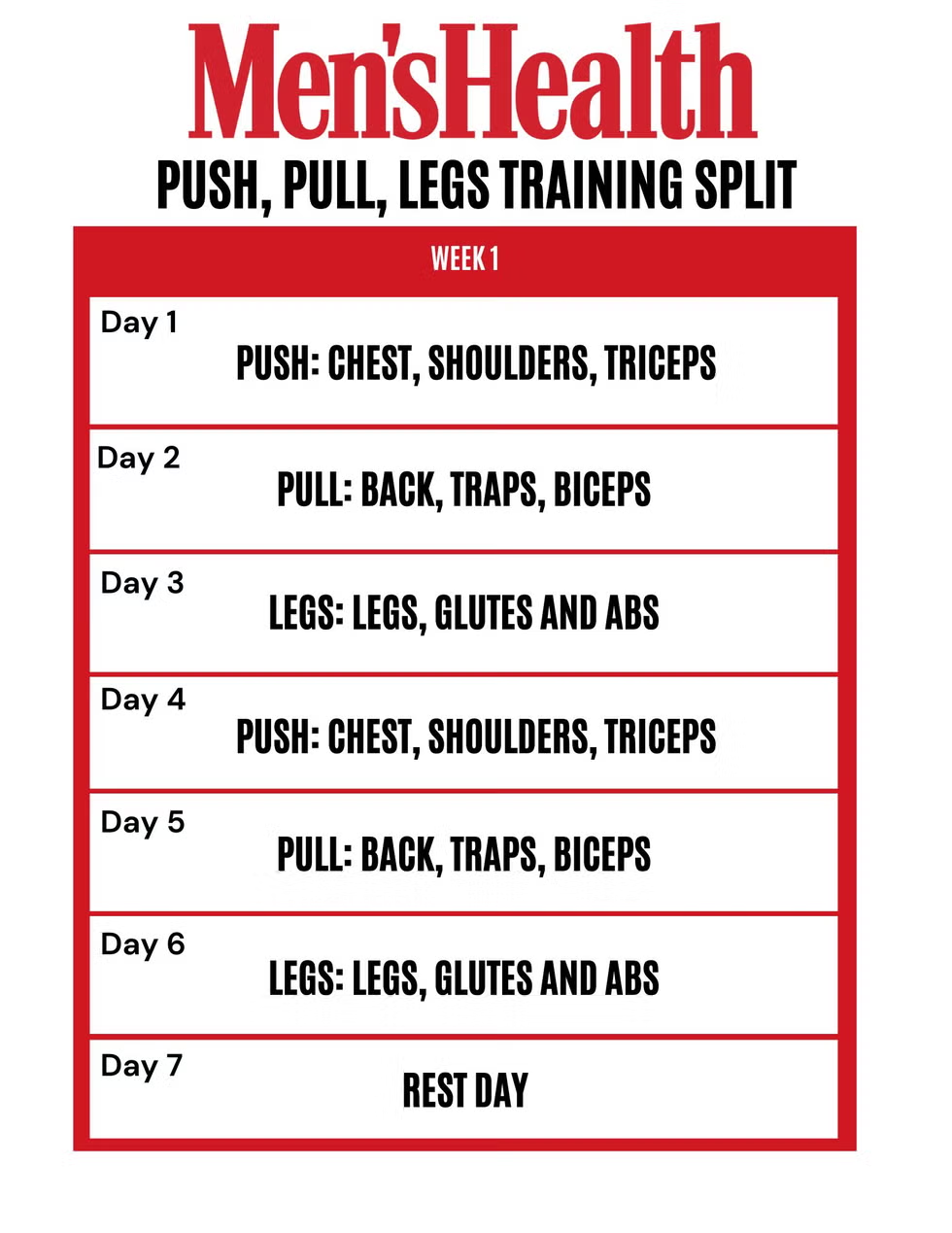
“Push, Pull, Legs” (PPL) is a popular workout split that divides training into three categories: push (chest, shoulders, triceps), pull (back, biceps), and legs (quads, hamstrings, calves). It’s a versatile split, often used for 3 or 6 days a week, and is designed to maximize muscle growth and recovery by strategically grouping exercises.
Understanding the PPL Split:
- Push Day:Focuses on exercises that involve pushing movements like the bench press, overhead press, and triceps extensions.
- Pull Day:Focuses on exercises that involve pulling movements like pull-ups, rows, and bicep curls.
- Leg Day:Focuses on exercises that target the lower body, including squats, deadlifts, and lunges.
Benefits of PPL:
- Targeted Muscle Growth:By isolating muscle groups, PPL allows for focused training and potentially greater muscle development.
- Adequate Recovery:Separating push, pull, and leg workouts allows for sufficient rest and recovery between muscle group training sessions.
- Flexibility:PPL can be adjusted to suit different fitness levels and schedules, with options for 3, 4, 5, or 6-day splits.
- Balanced Development:The split ensures that all major muscle groups are trained, promoting balanced strength and physique development.
How to Implement PPL:
- 1. Choose a Schedule:Decide whether you want to train 3 days a week (e.g., Monday-Push, Tuesday-Pull, Wednesday-Legs) or 6 days (cycling through the workouts twice).
- 2. Select Exercises:Choose a variety of compound and isolation exercises for each muscle group based on your experience and goals.
- 3. Progressive Overload:Gradually increase the weight, reps, or sets over time to continue challenging your muscles and promoting growth.
- 4. Proper Warm-up and Cool-down:Always warm up before each workout and cool down afterwards to prevent injuries.
No responses yet